
Inspection of a 13.6 m Curtainsider Semi-Trailer Following Cargo Damage, Including Damage Assessment and Handling of the Transport Damage Claim
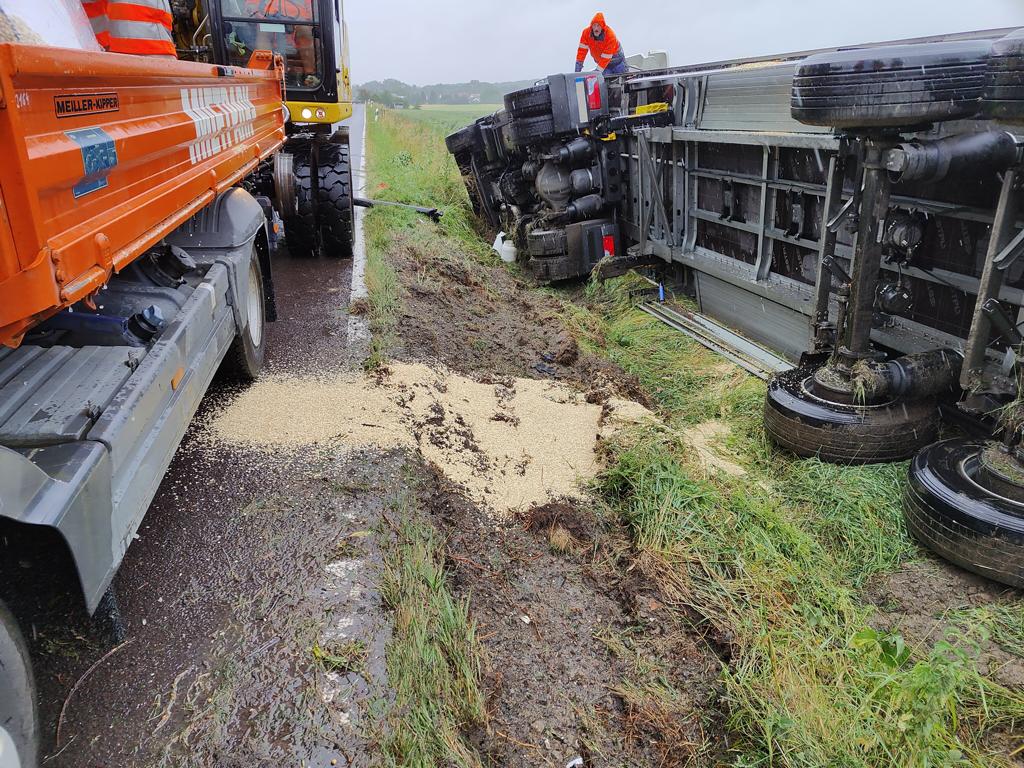
On 23 June 2023, we were commissioned by a Danish surveying company to investigate a road traffic accident involving cargo damage. In addition, measures were implemented to mitigate the damage to the affected buckwheat consignment.
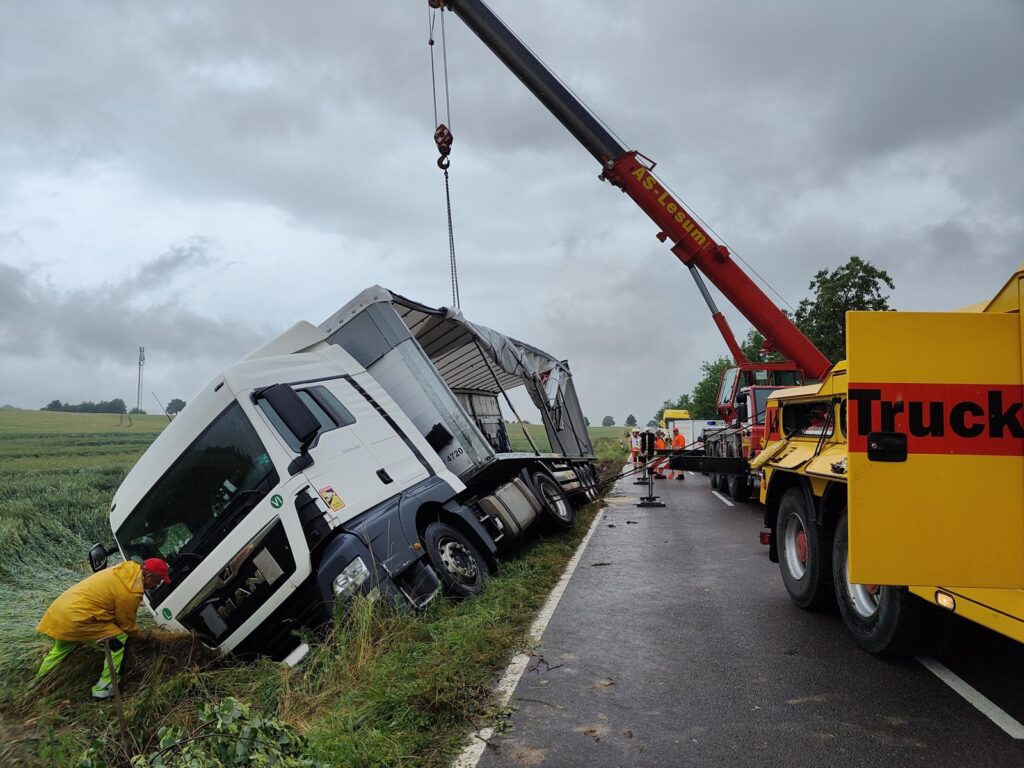
Accident circumstances: During the night, a storm accompanied by heavy rainfall moved across the area of the country road leading towards D-38162 Cremlingen, resulting in severely impaired driving and visibility conditions.
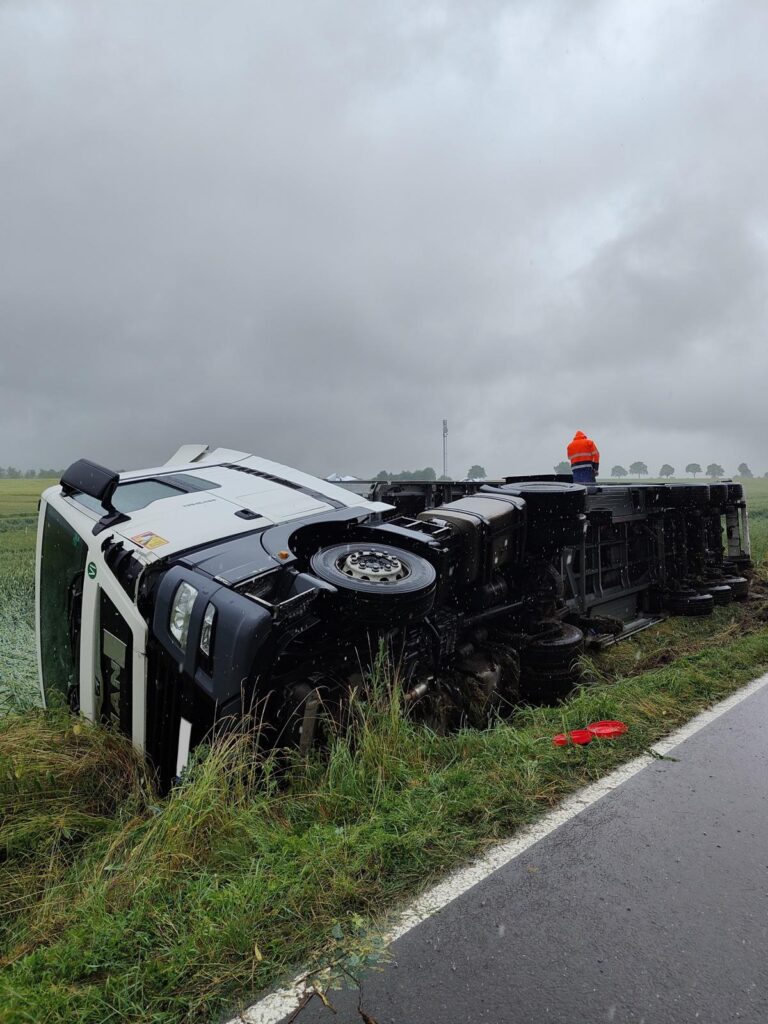
As a result, a 13.6 m curtainsider semi-trailer loaded with 28 Big Bags, each containing 800 kg of buckwheat, left the carriageway and overturned into a roadside ditch. The lateral departure from the road and subsequent impact placed considerable stress on the cargo securing system and caused the cargo to shift within the semi-trailer.
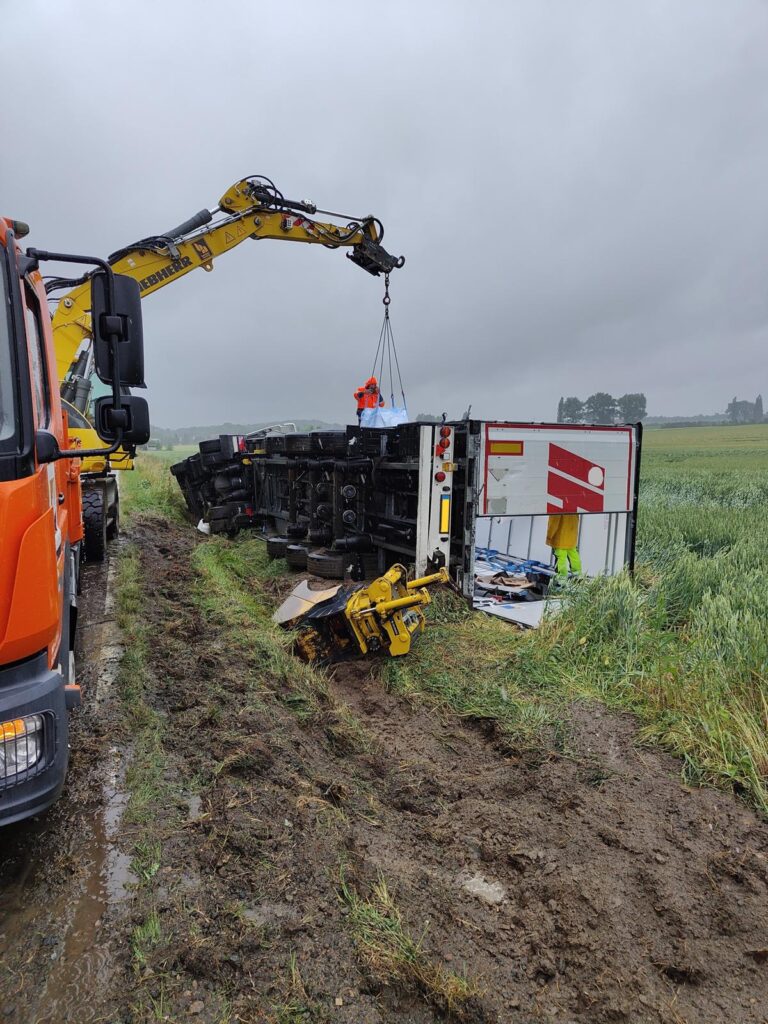
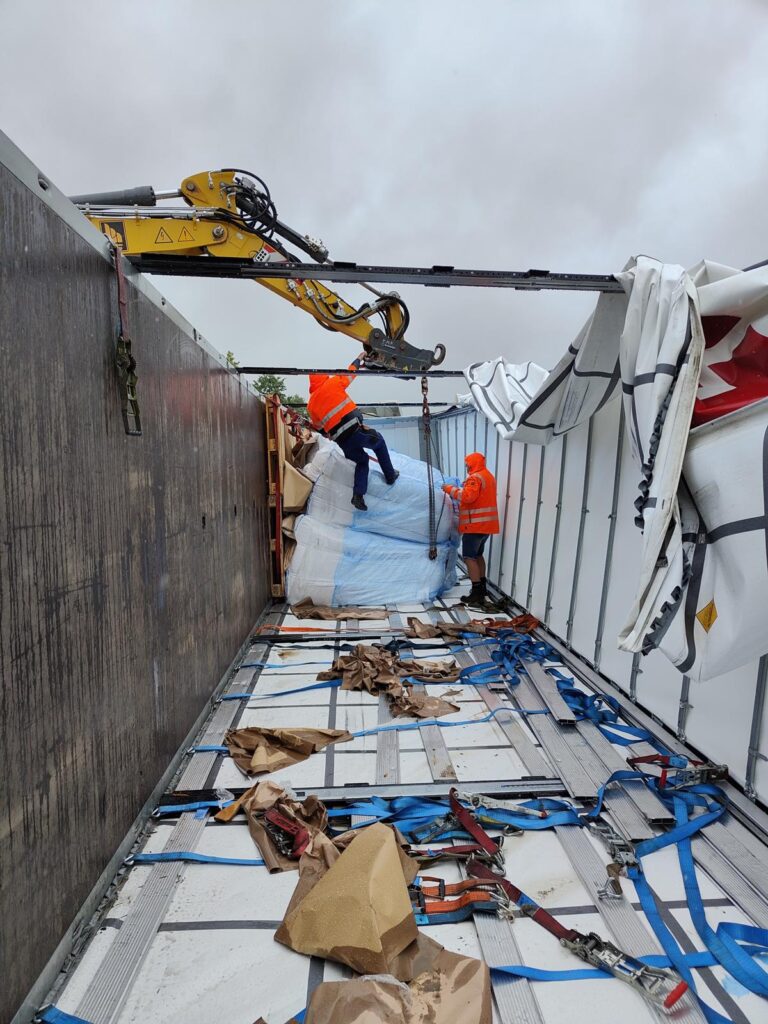
As a consequence, 15 Big Bags were torn open; a further 5 were damaged by sharp-edged metal components during the recovery and lifting of the vehicle. The cargo was stowed in plastic Big Bags on wooden pallets. Anti-slip mats had been placed continuously between the pallets and the loading floor. All Big Bags were secured with tie-down straps. In addition, it is assumed that there was positive fit between the individual units and against the front bulkhead.
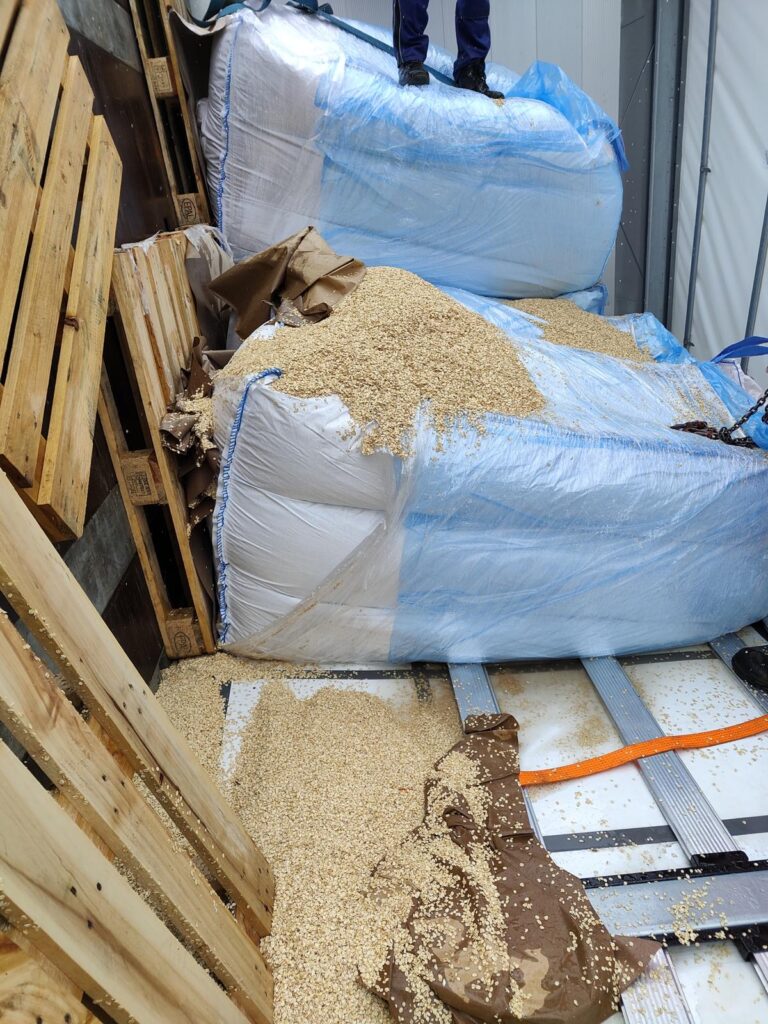
The cargo was intended to be transported directly from the agricultural producer to the production facility for further processing. Due to the continuing heavy rainfall and the non-hermetic closure of the Big Bags, moisture penetrated the packaging, resulting in the buckwheat becoming waterlogged. The primary focus was on securing the cargo and minimising consequential costs.
Immediate Measures:
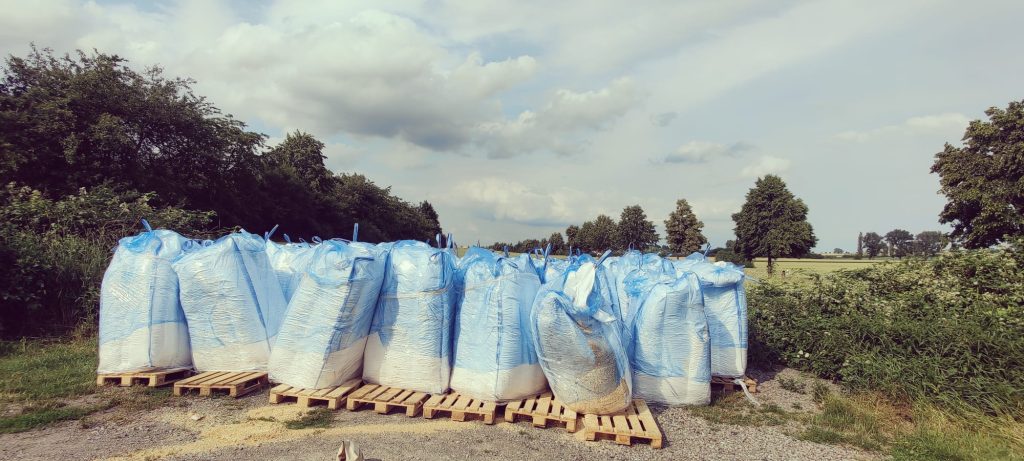
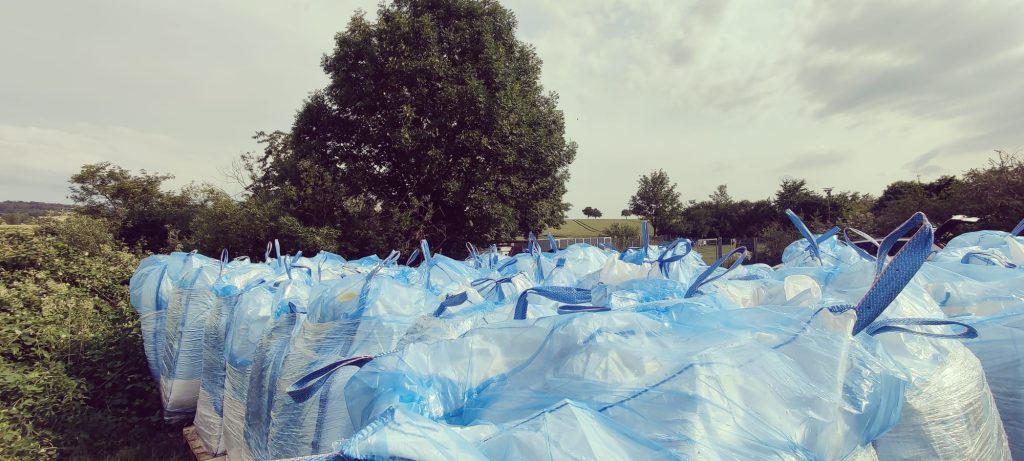
Within the first hour, a nearby storage area was arranged to temporarily store the Big Bags that remained intact. The situation became particularly critical on the following day. Exposure to sunlight caused the waterlogged Big Bags to heat up, resulting in condensation and so-called “sweating”. This created favourable conditions for mould growth and could have rendered the buckwheat unsuitable even for animal feed within a short period of time.
At the same time, all parties involved were coordinated:
- Consignor: Preparation of a replacement shipment for the production facility awaiting delivery.
- Haulage contractor: Arrangements for the deployment of a replacement vehicle.
- Recovery contractor: Selection, commissioning and deployment of a specialised recovery company, which arrived on site within three hours.
- Police: Coordination of the phased reopening of the accident site — one lane after two hours and full reopening following completion of the recovery operation.
- Cleaning contractor: Organisation of road cleaning following completion of the recovery operation.
- State road traffic authority: Coordination of traffic safety measures and official clearance of the operation.
- Road maintenance service: Contact and coordination regarding the replacement of damaged roadside delineator posts.
Technical Recovery and Logistics
The damaged Big Bags containing the buckwheat were recovered by crane and transported to the designated storage area. Following unloading, the overturned truck was righted by the recovery contractor. The road accident and recovery operation were documented using photographs, video recordings and recorded witness statements. The documentation was subsequently consolidated into a final damage report for insurers and the relevant authorities. The partially water-damaged buckwheat was immediately released for recovery or use as animal feed in order to prevent further quality deterioration in connection with the transport damage, as no certified biogas plant was available within an economically viable distance.
• A replacement delivery ensured uninterrupted supply to the production facility without any significant delay.
• Following completion of the recovery and clean-up operations, the accident site was fully reopened to traffic.
In conclusion, no technical defects were identified on the vehicle. In particular, there were no abnormalities concerning tyre tread, tyre pressure or any other vehicle components relevant to road safety.