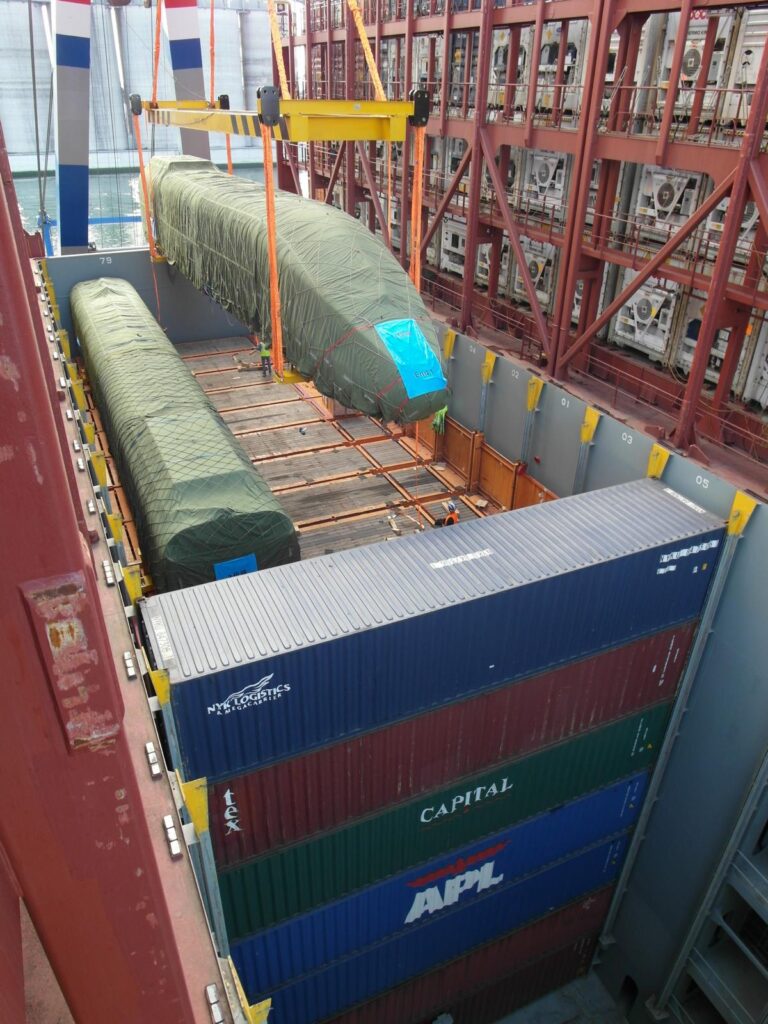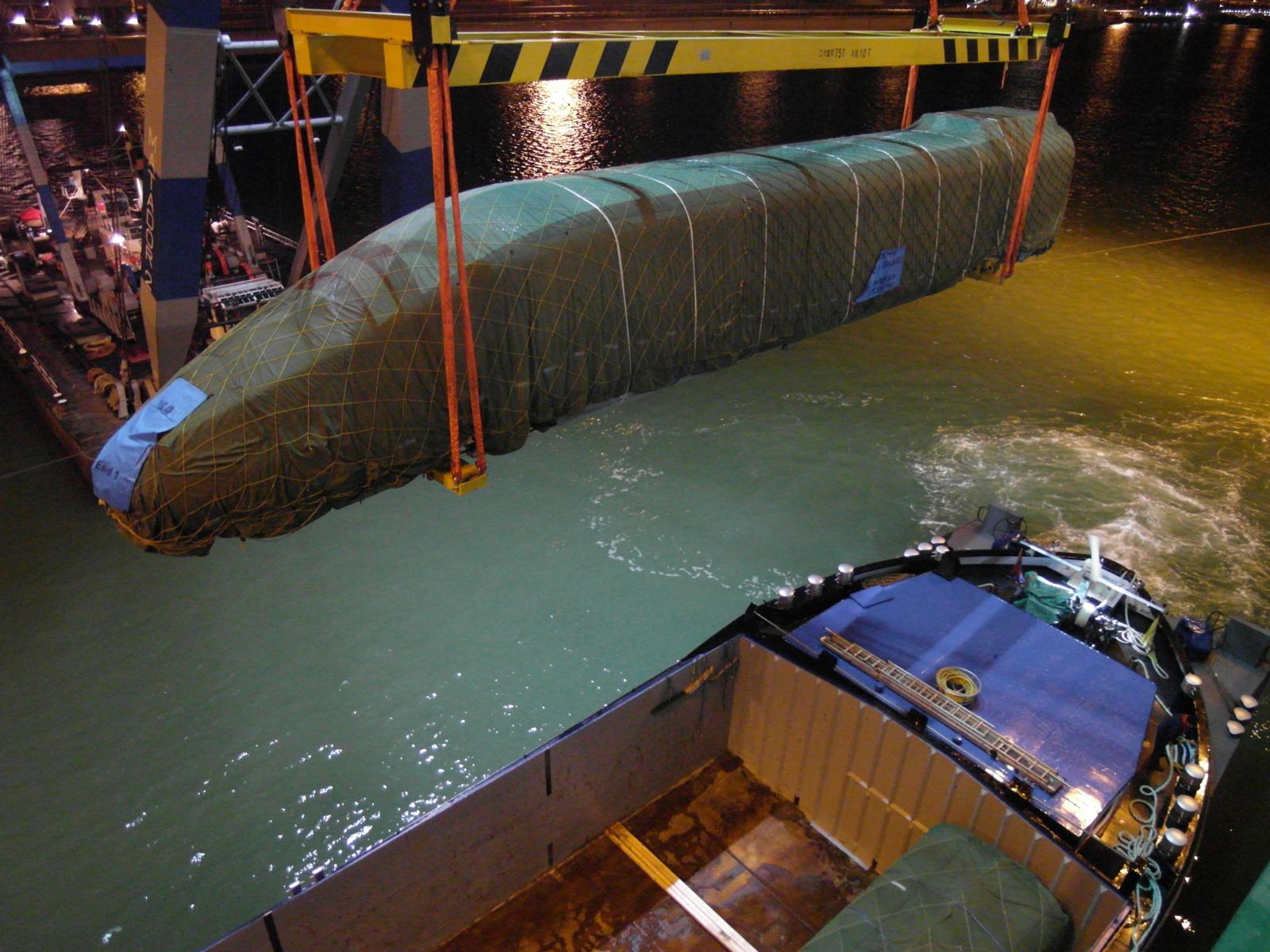
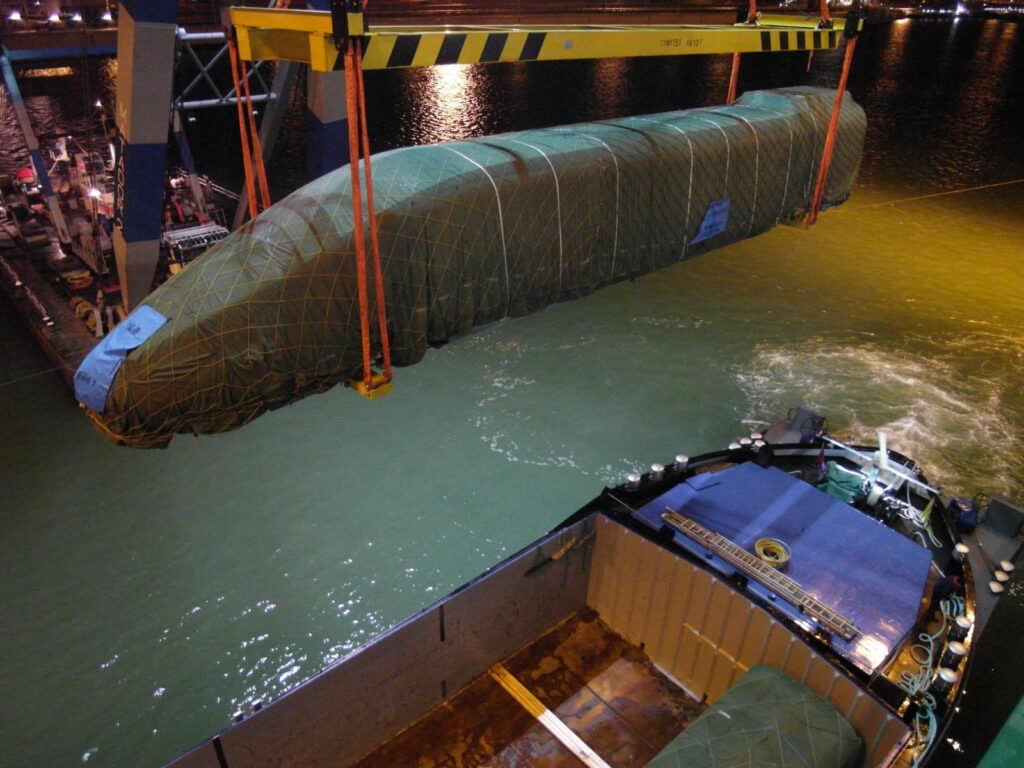
A German project freight forwarder commissioned us to inspect the cargo, survey the transshipment of two high-speed train units, and prepare lifting plans for the lifting operations.
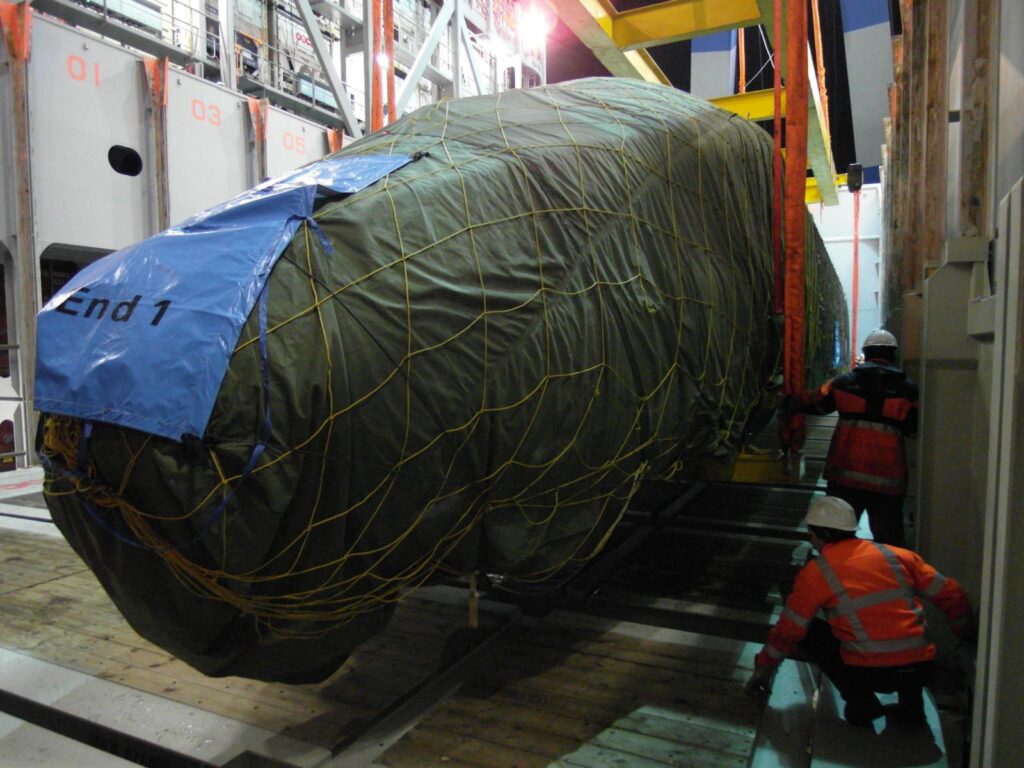
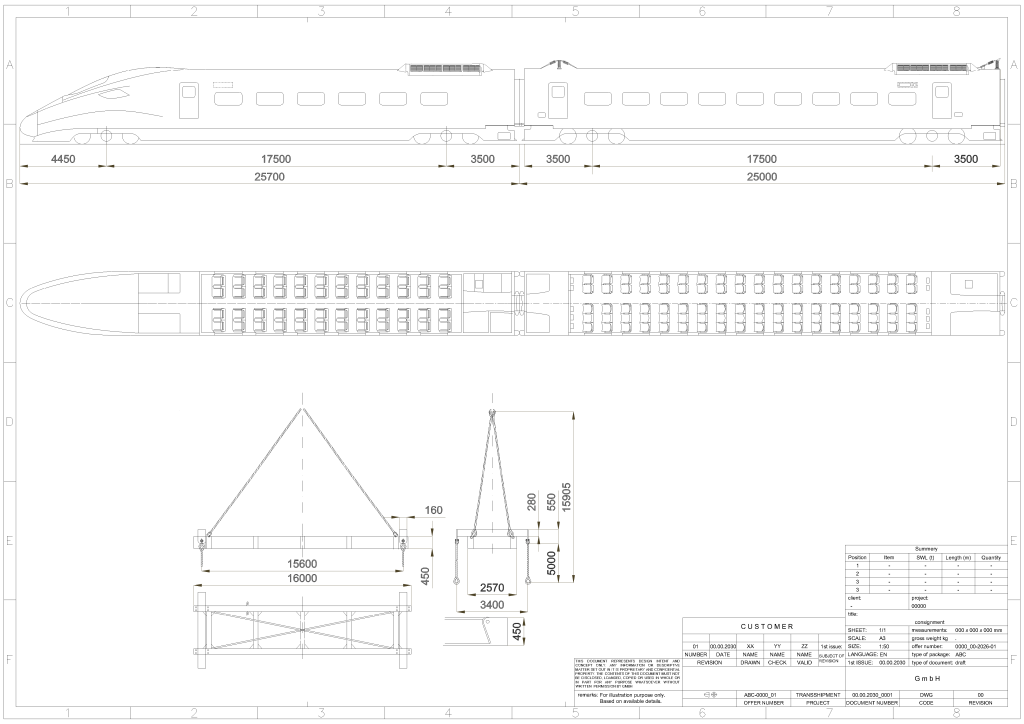
The train carriages from China, with a value of 5.5 million US dollars, were to undergo a technical inspection in Austria and be transported back to China after two months. The units measured 25.7 × 3.3 × 4.2 metres and weighed 52.4 tonnes.
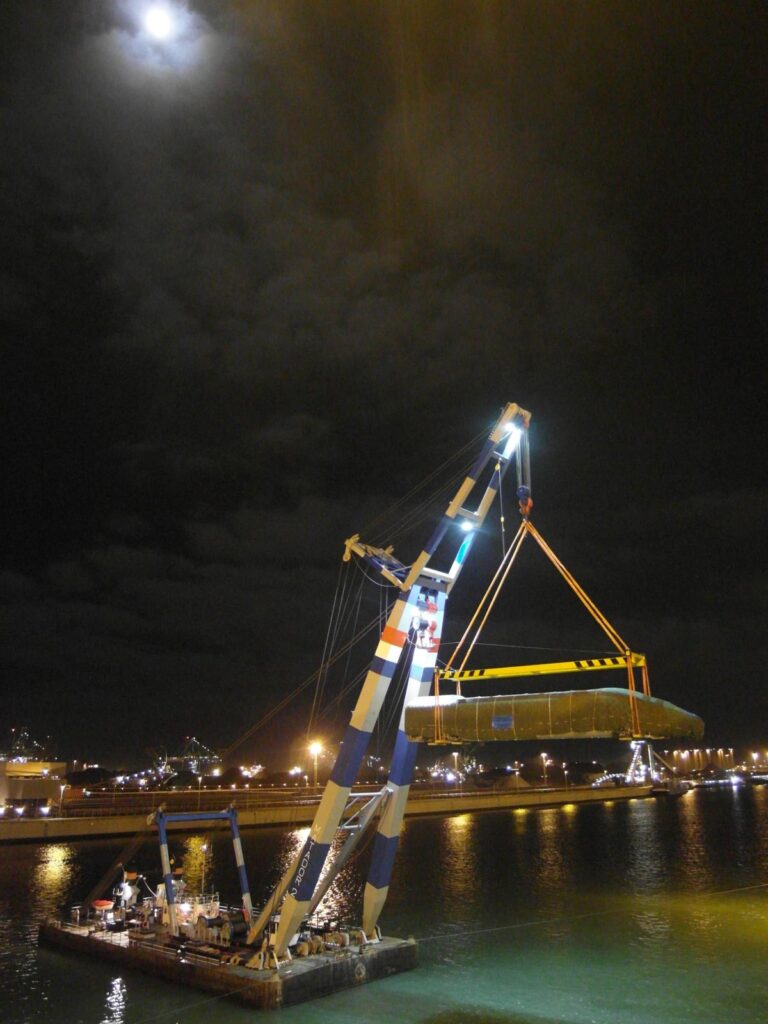
The transhipment between the container ship MOL Quintet and the inland waterway vessel Tiamo took place at the Delta Terminal in Rotterdam (Europaweg 875) using the Matador floating crane (built in 1970,
lifting capacity: 400 t).
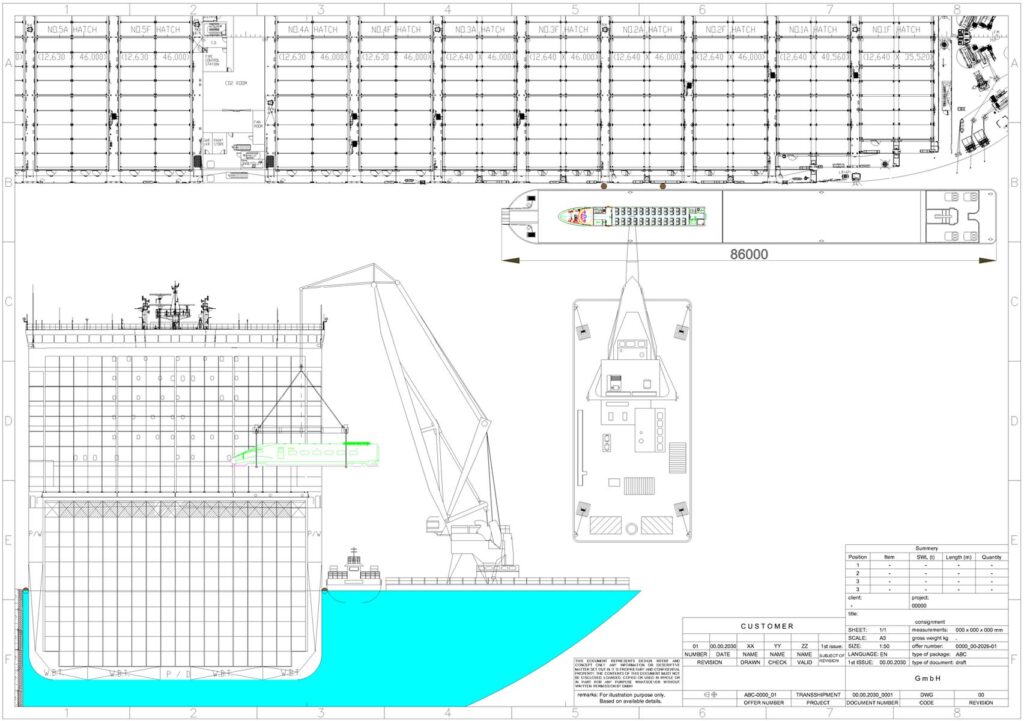
Following the ISPS registration on board the vessel, the inspection of the container ship began; the vessel was found to be in a generally well-maintained condition. During the inspection, checks were carried out to ensure that the loading areas (flat racks) were dry and bore valid CSC certificates.
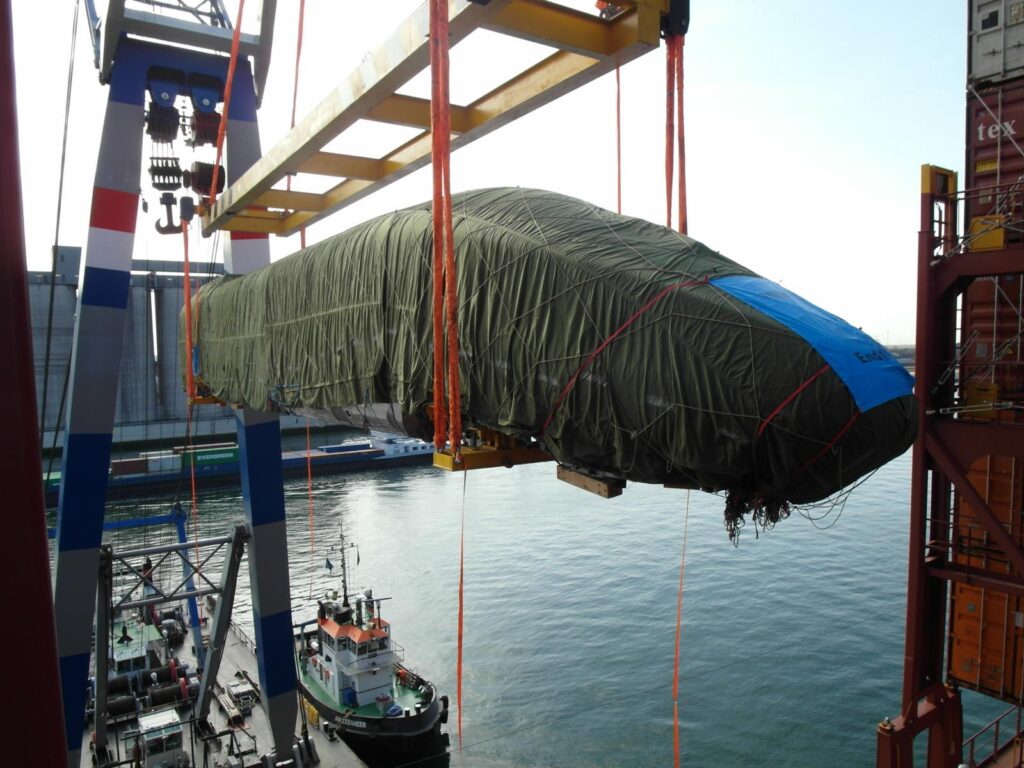
This was followed by a visual inspection of the carriages of the high-speed train to check for external damage. A check was also carried out to ensure that all the necessary markings and type plates required for handling were in place.
Before the transhipment took place, the crossbeam was inspected to ensure it was in good condition as a load-bearing device. The lifting accessories, such as shackles and round slings, were also checked to ensure they were in good condition and had valid certification.
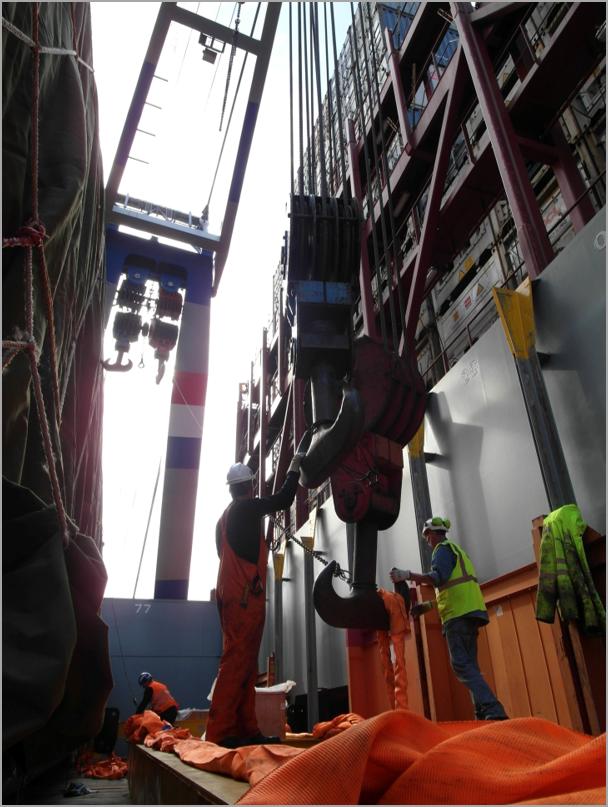
Due to the strong wind on the day of loading, precise coordination between the floating crane and the stevedores was required, involving the use of additional mooring lines. The floating crane had only a narrow loading corridor at its disposal.
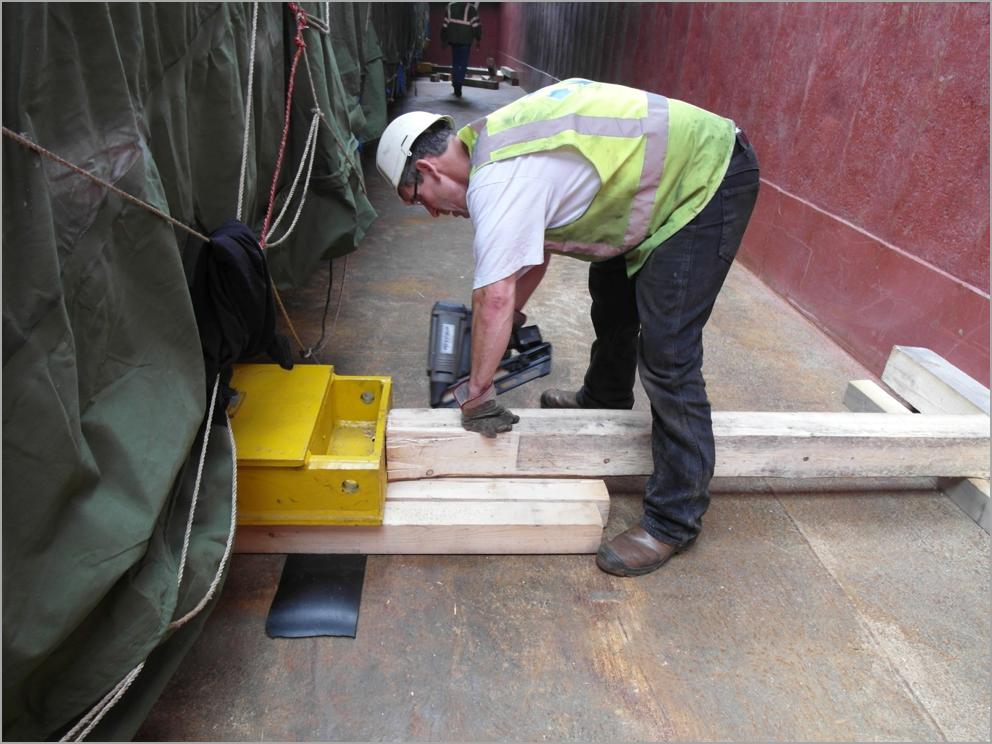
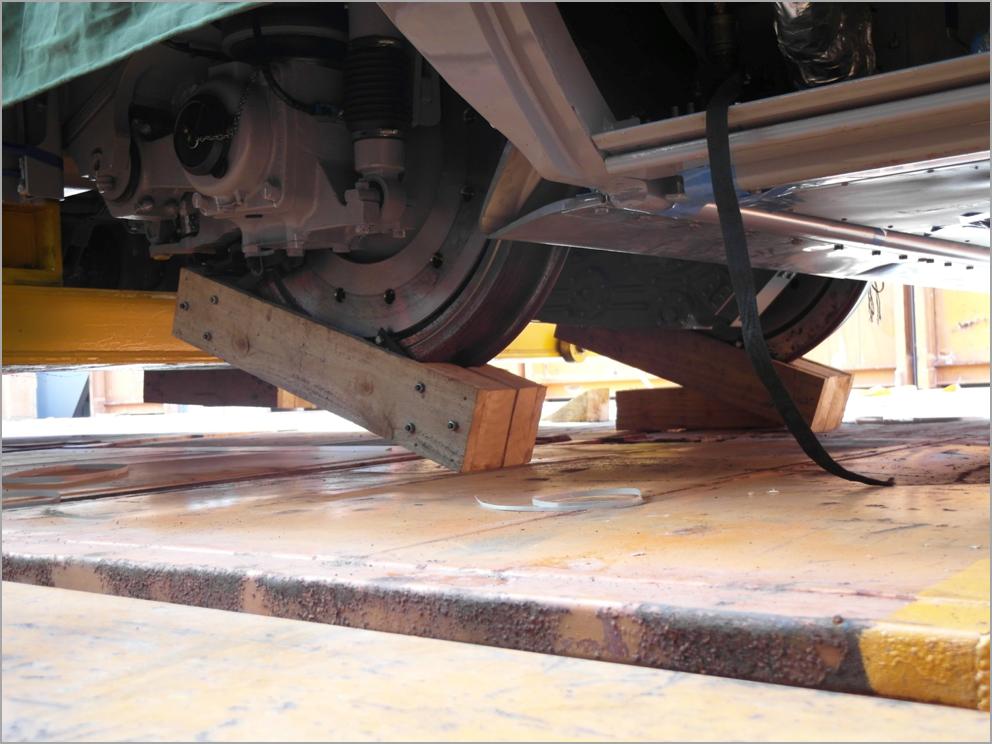
At the request of the Chinese shipper, the cargo on the inland vessel Tiamo was secured using square timbers.
Result: The transhipments during the outward and return journeys were carried out successfully.