
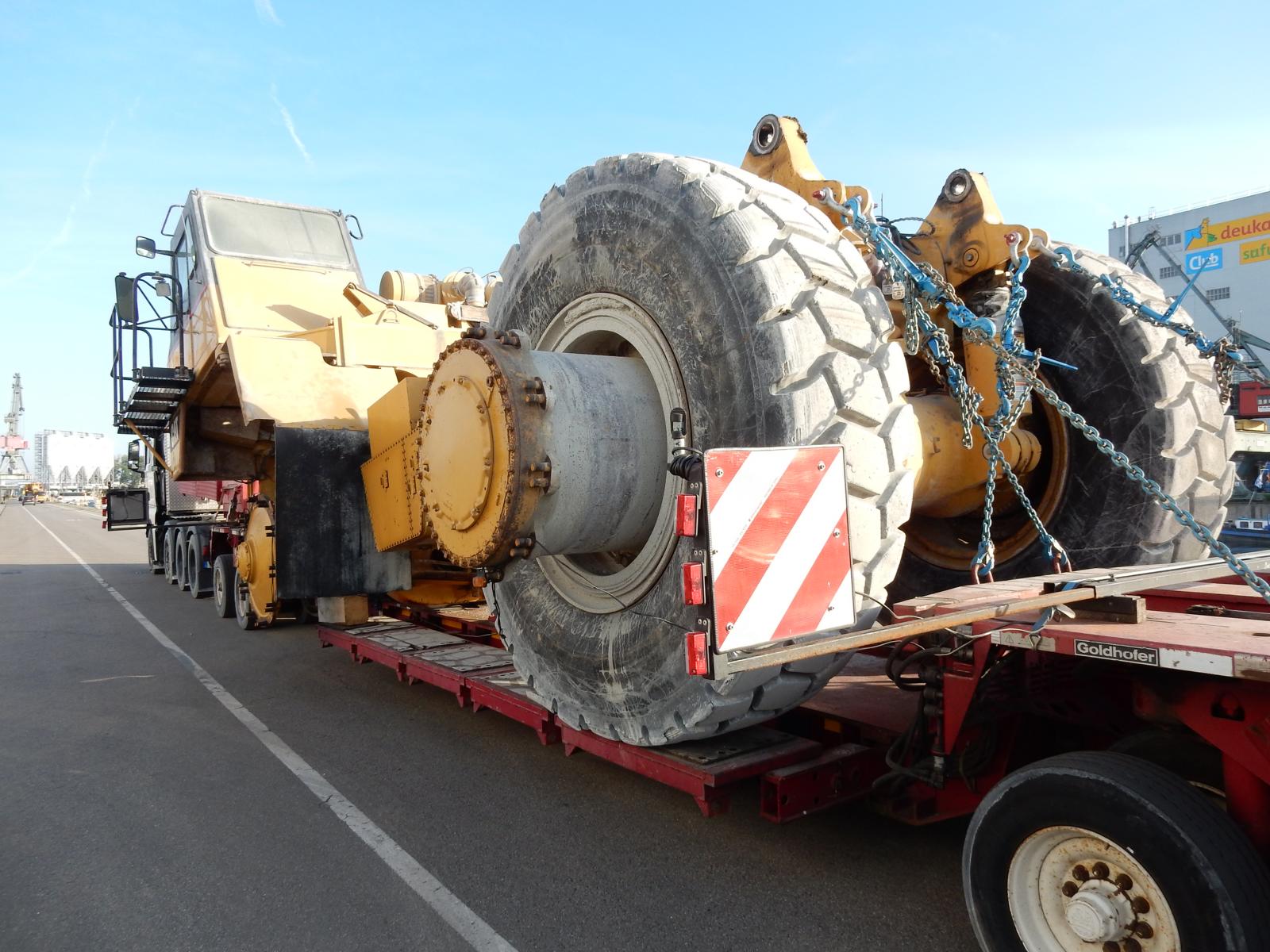
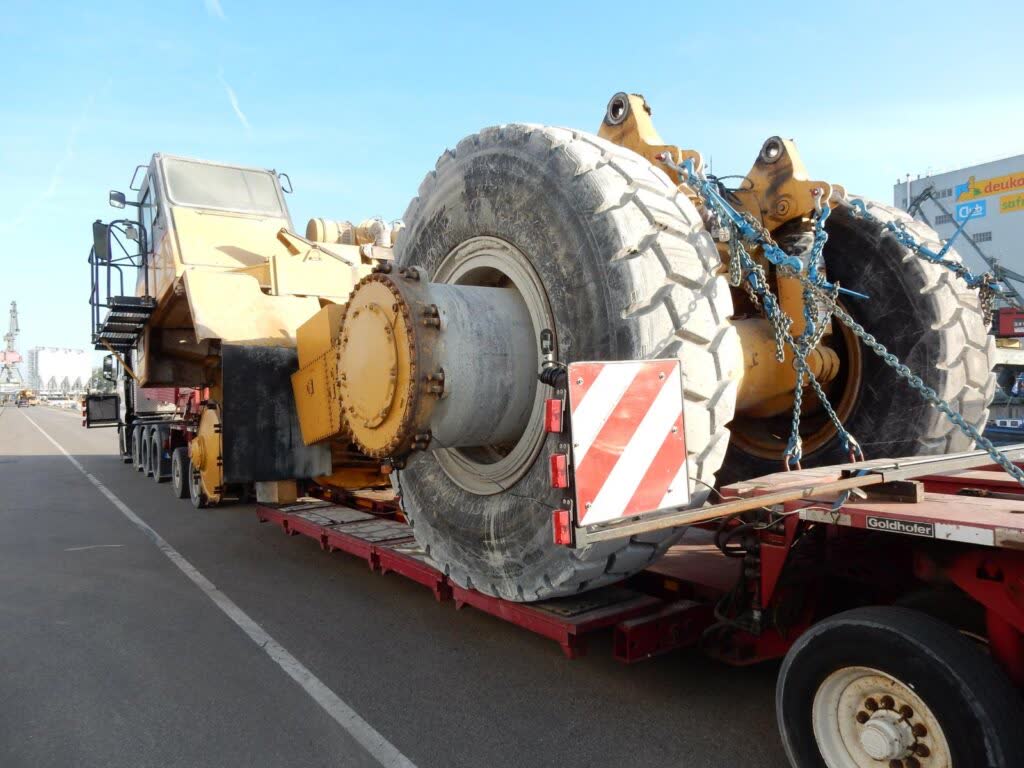
Commissioned by a German certification and inspection company to supervise the handling of a dump truck and to prepare loading and lifting drawings
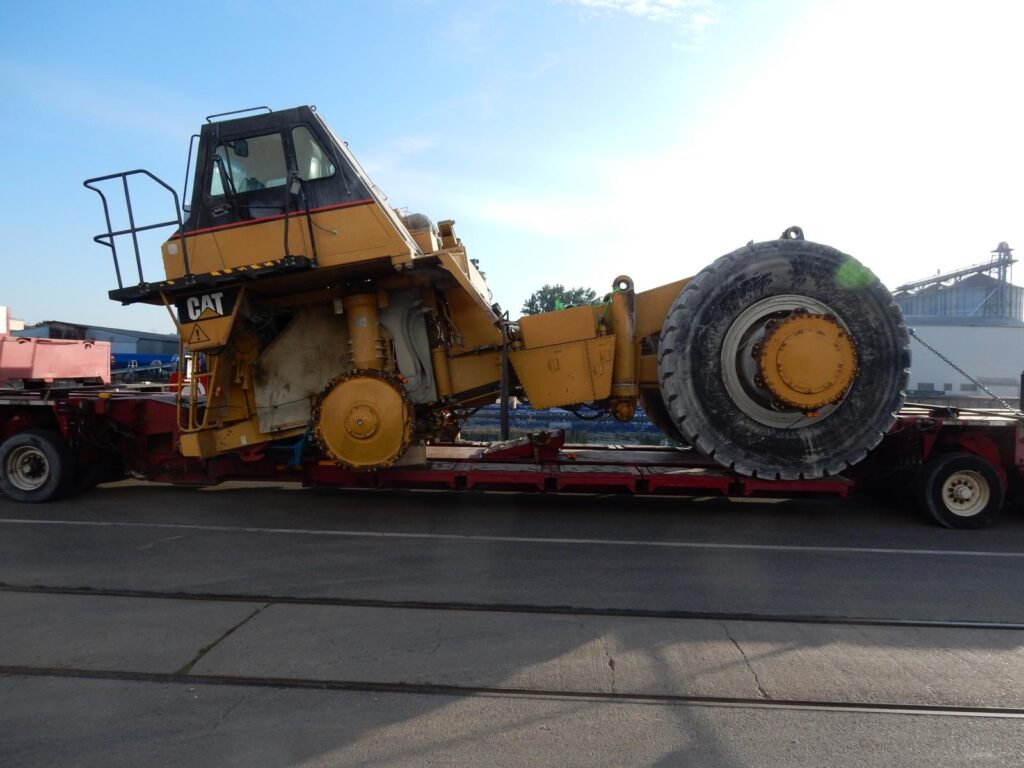
As no lifting or cargo securing instructions were available, the loading options for the dump truck were assessed during an on-site inspection.
When determining the total weight, it had to be taken into account that the dump body and two front wheels as well as two of the four rear wheels had been removed. Based on the Caterpillar data sheet, we calculated the resulting total weight as 50.2 t, based on a complete vehicle weight of 73 t, less 16 t for the dump body and less 4 × 1.7 t for the wheels.
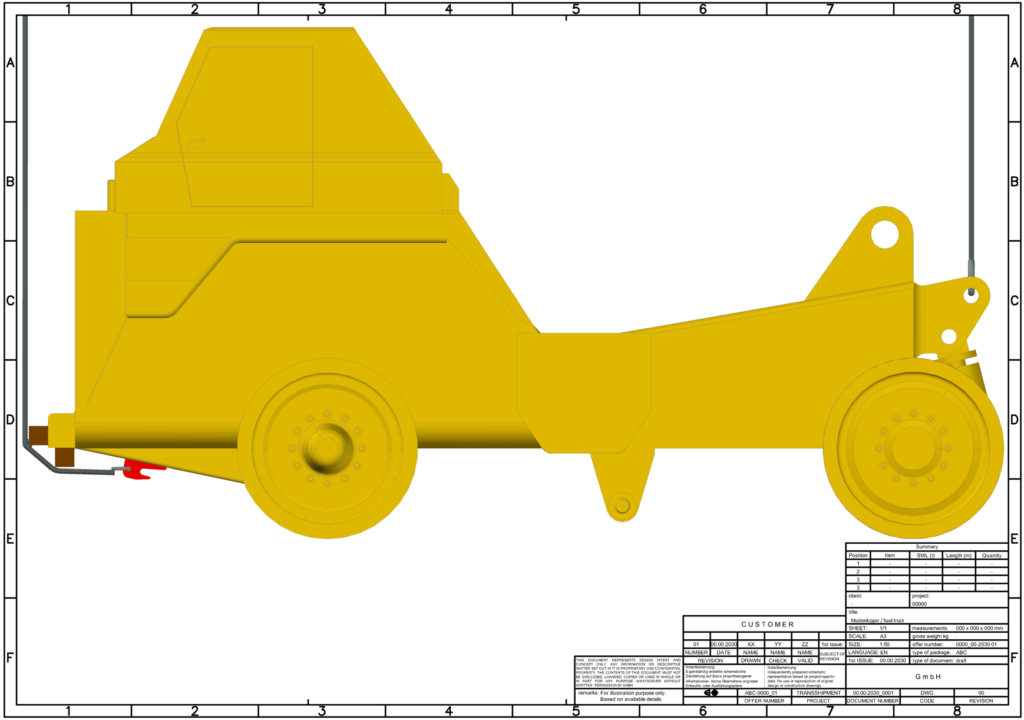
According to the documentation, the Caterpillar 777D has the following dimensions: length 9.78 m, width 6.1 m (operating width) and height 4.57 m to the top of the ROPS/cab guard. In addition, the wheelbase is 4.57 m and the width across the rear tyres is 5.26 m. In summary, this results in overall dimensions of approximately 9.8 × 6.1 × 4.6 m (L × W × H).
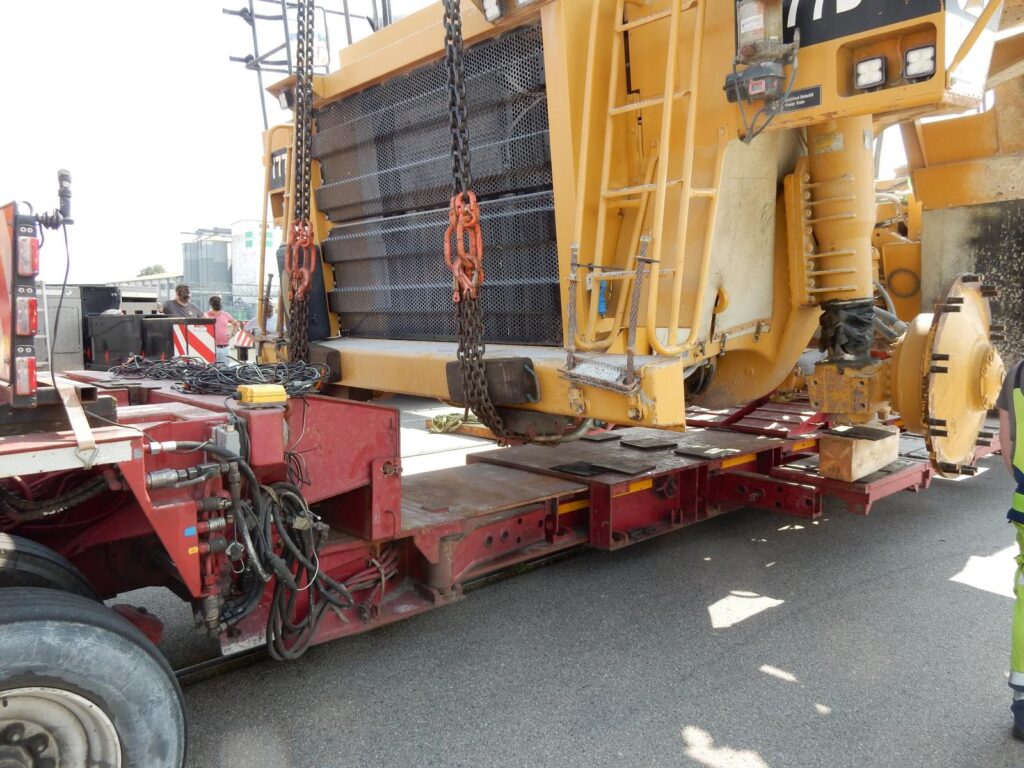
At the port in Regensburg, we found the cargo secured on a 2+4-axle excavator transport platform.
The dump truck was approximately 20 to 25 years old. No designated lifting points or centre-of-gravity information were identifiable on the cargo.
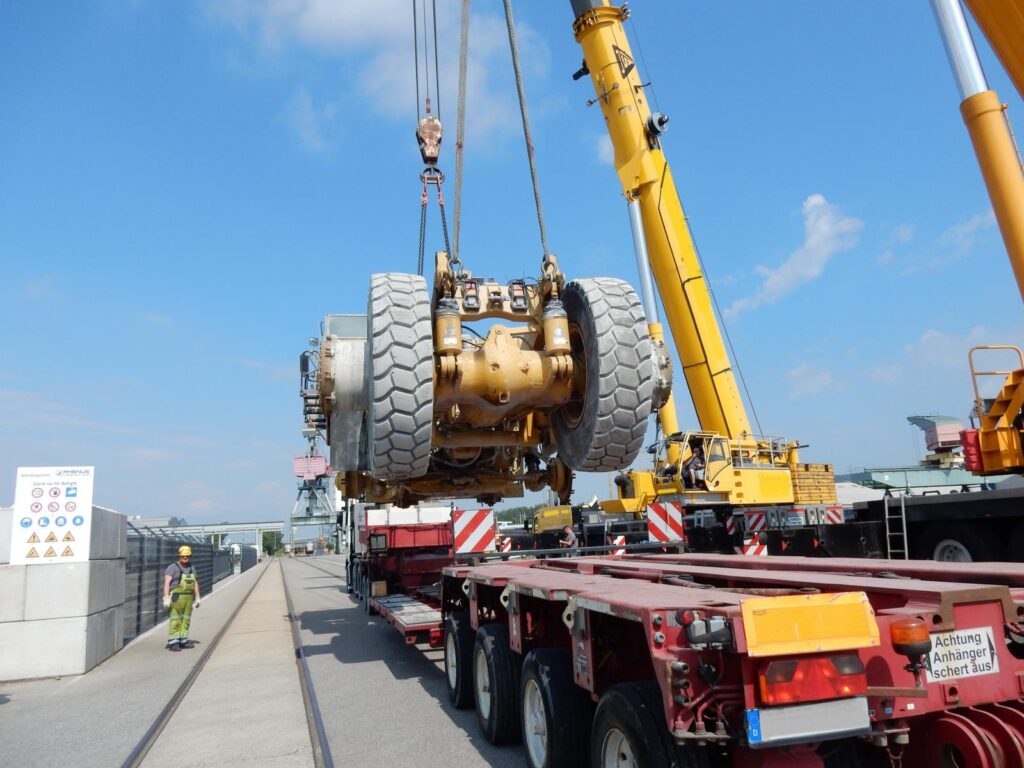
At the port, we assessed which lifting accessories (e.g. lifting beams) were available to lift the dump truck onto the inland waterway vessel.
As the centre of gravity of the cargo was unknown due to the removal of components and point loading of the vessel’s deck had to be avoided during placement, we decided to use a tandem lift with two mobile cranes.
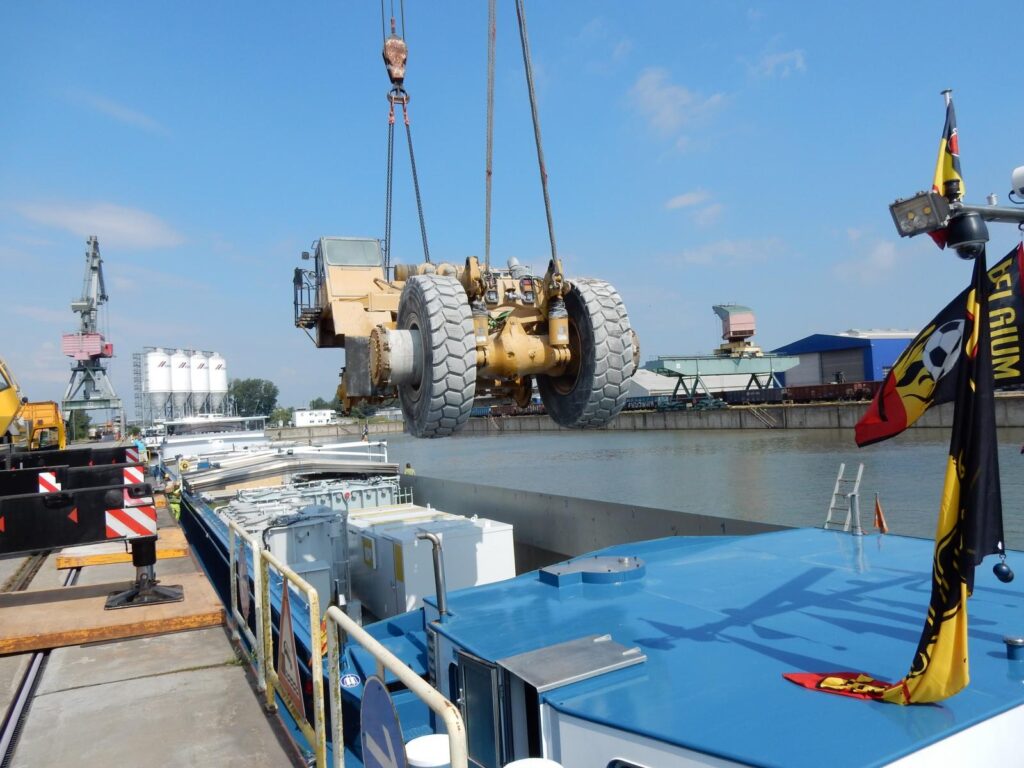
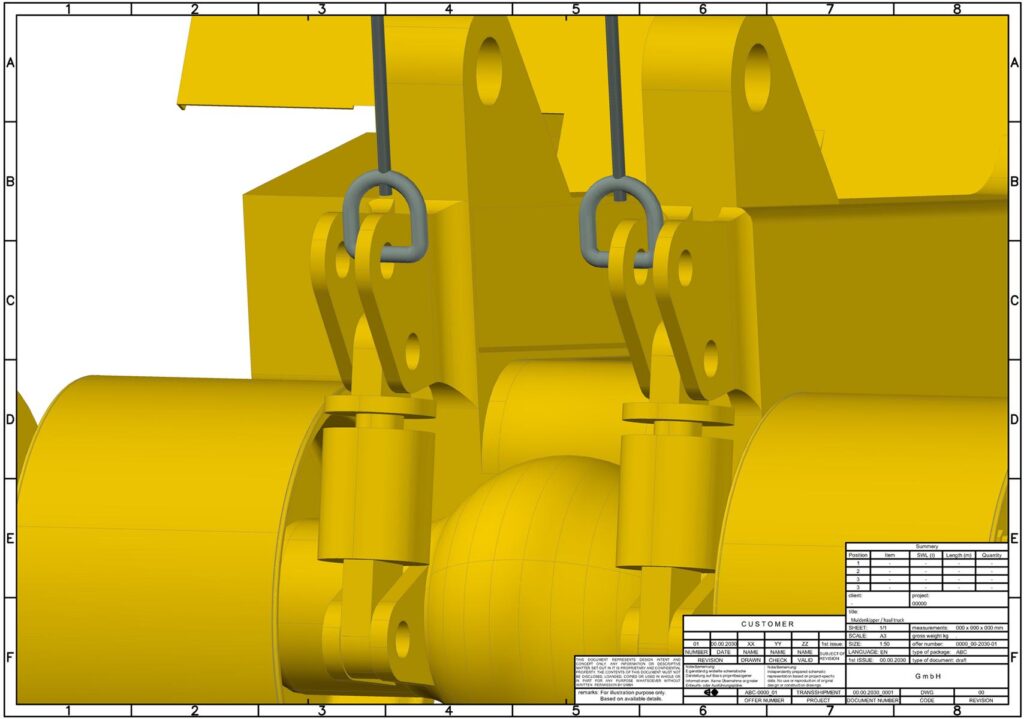
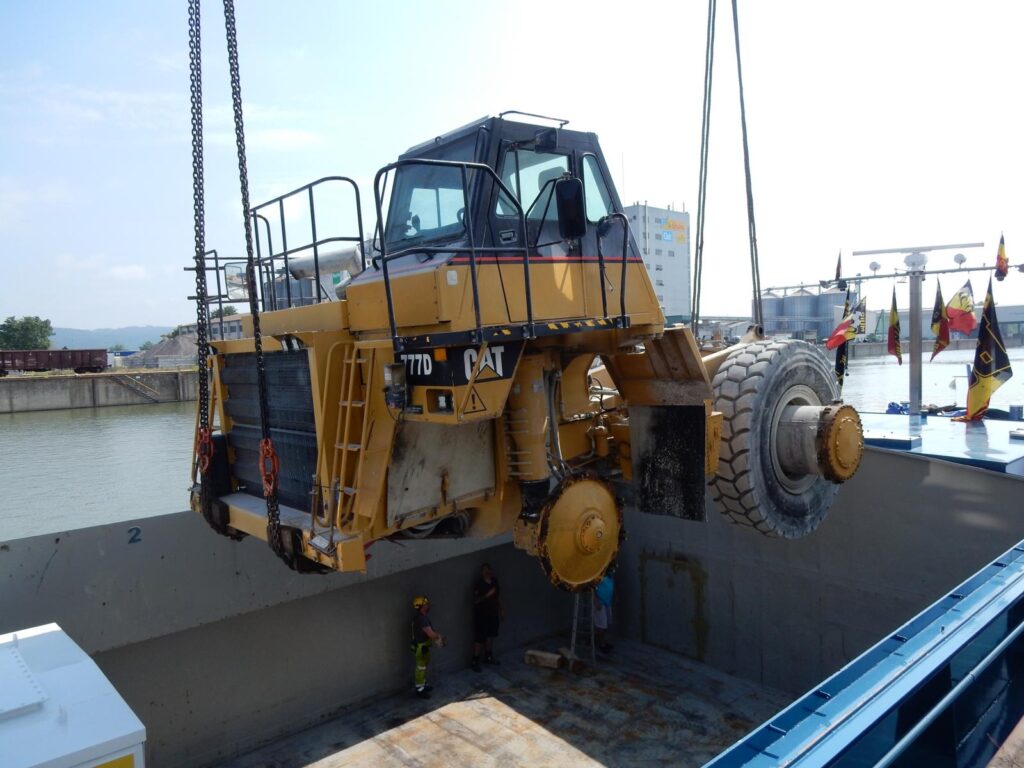
The two mobile cranes were positioned and the cargo was rigged. Following a brief discussion with all parties involved and establishment of radio communication, the cargo was lifted onto the inland waterway vessel.
Additional load distribution mats and solid timber blocks were placed beneath the support surfaces in order to distribute the load evenly into the vessel’s deck.
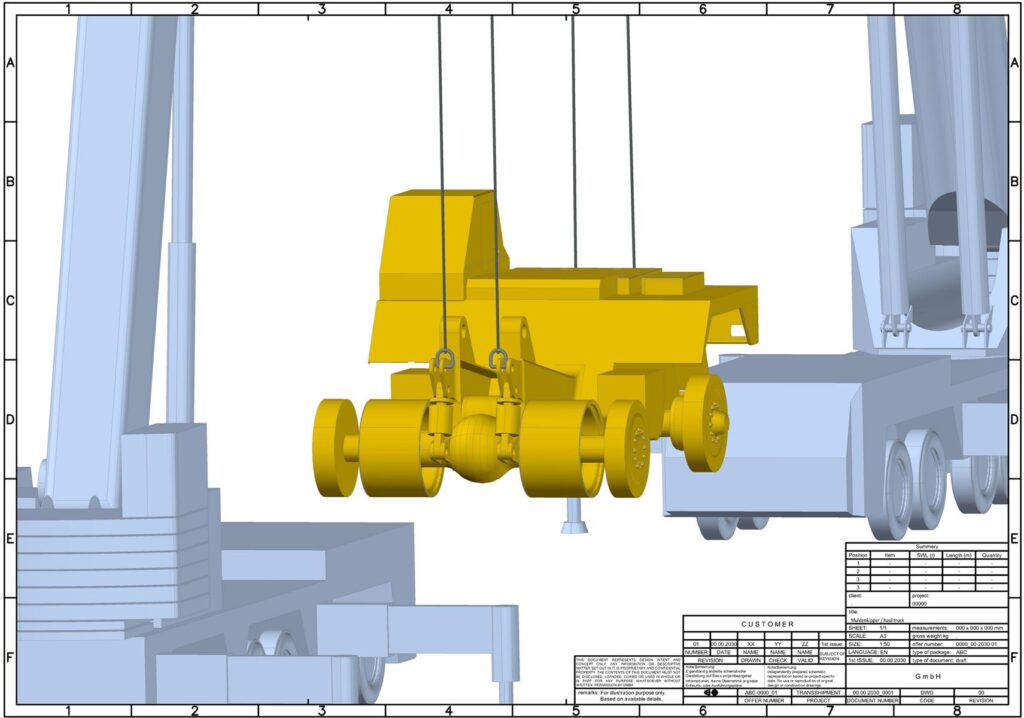
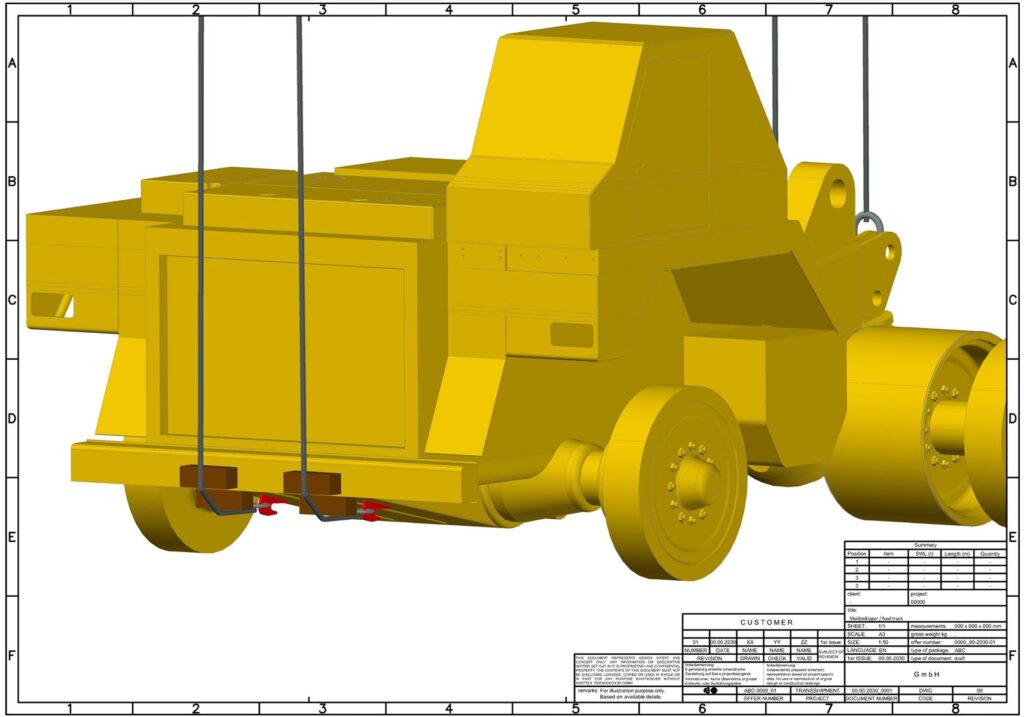
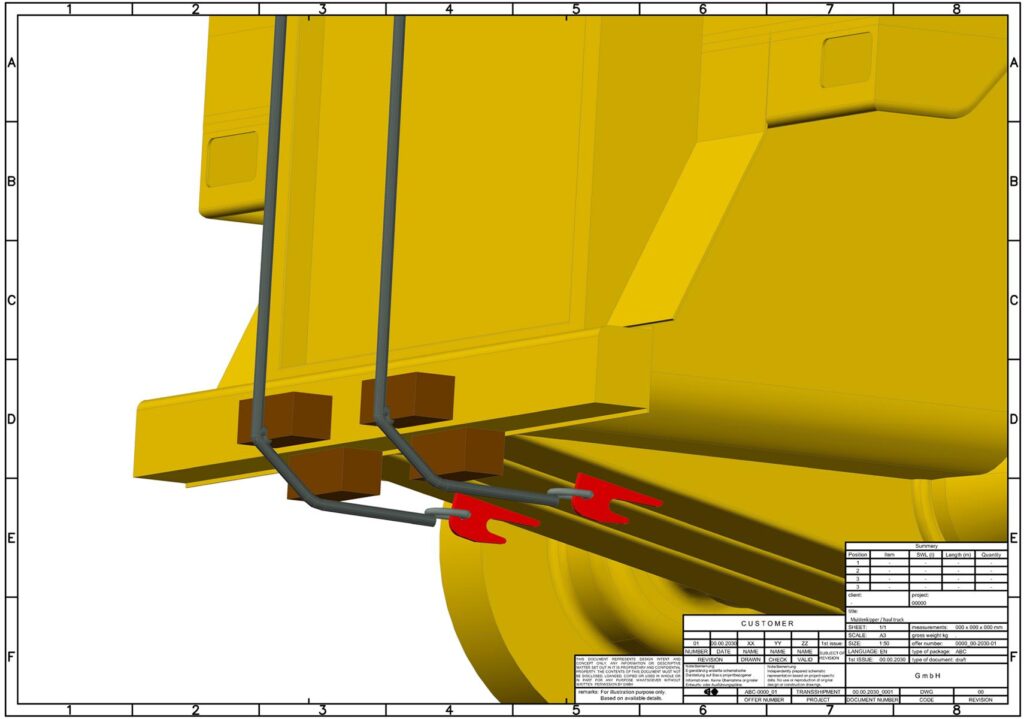
The scope of services also included deriving loading and lifting drawings from a 3D model in order to optimally plan future lifting operations and arrange suitable crane equipment in advance.